AI Systems & Agentic Automation
AI Employees for Every Role. AI Systems for Every Business.
Neuralex Labs designs and builds AI agents, intelligent workflows, and production-ready software that help businesses automate repetitive work, move faster, and operate with greater leverage.
- Supervised by default
- Works in your existing tools
- Strategy to production
What we build
- Agentic workflows
- AI employees
- RAG & knowledge
- Voice & messaging
- System integrations
- Web & SaaS engineering
- Evaluation & monitoring
What can an AI employee do?
AI Employees that do more than answer questions.
An AI employee is a supervised digital worker designed around a specific business function. It can understand context, use approved tools, execute tasks, communicate with systems, and escalate decisions when human judgment is required.
Understands context
01Reads the request alongside account history, documents, and policy.
Uses approved tools
02Works inside your CRM, inbox, help desk, and data stores with scoped access.
Executes tasks
03Updates records, drafts and sends communication, schedules, files, and reports.
Escalates judgment
04Hands sensitive or uncertain decisions to the right person, with context.
AI employees by role
Designed around the work your teams already do.
Each role has its own responsibilities, tools, and approval rules. Sensitive and high-impact decisions stay with people.
AI Sales Employee
What it handles
- Research inbound and outbound leads from public and internal sources
- Enrich company and contact records in the CRM
- Qualify prospects against your ideal customer criteria
- Draft personalised first-touch and follow-up emails
- Send follow-ups on an agreed cadence
- Propose meeting times and book them in the calendar
Asks a person before
- First outreach to strategic accounts
- Any message mentioning pricing
- Opportunities above an agreed value
AI Sales Employee
Sales development
- Task
- Qualifying inbound lead from pricing page
- Tools
- CRMEmailCalendar
- Approval
- Required for pricing / contract actions
- Last action
- Enriched account and drafted reply
AI Support Employee
What it handles
- Read incoming emails, chats, and tickets
- Retrieve customer account, order, and history context
- Classify issue type, urgency, and sentiment
- Draft responses using your knowledge base and policies
- Send replies for approved, low-risk request types
- Update ticket fields, tags, and status
Asks a person before
- Refunds and credits
- Account changes
- Replies to complaints
AI Support Employee
Customer support
- Task
- Answering a delivery-status request
- Tools
- Help deskOrder DBKnowledge base
- Approval
- Required for refunds and account changes
- Last action
- Tagged ticket and drafted reply
AI Operations Employee
What it handles
- Monitor queues, workflows, and scheduled processes
- Move and transform data between systems
- Reconcile records across two or more sources
- Resolve clear mismatches using agreed rules
- Generate daily and weekly operational reports
- Chase missing inputs from internal teams
Asks a person before
- Corrections outside defined rules
- Changes to financial records
- Bulk updates
AI Operations Employee
Operations
- Task
- Reconciling orders against warehouse records
- Tools
- ERPDatabaseSlack
- Approval
- Required for changes outside defined rules
- Last action
- Matched 412 records, flagged 3 exceptions
AI Marketing Employee
What it handles
- Research topics, competitors, and audience questions
- Prepare briefs and first drafts in your brand voice
- Repurpose long content into channel-specific formats
- Pull campaign data from ad and analytics platforms
- Summarise performance and highlight changes
- Prepare weekly and monthly marketing reports
Asks a person before
- Anything published externally
- Budget recommendations
- Claims about products or results
AI Marketing Employee
Marketing
- Task
- Preparing the weekly campaign report
- Tools
- AnalyticsAdsDocs
- Approval
- Required for anything published
- Last action
- Compiled channel metrics
AI Finance Employee
What it handles
- Extract data from invoices, receipts, and statements
- Categorise transactions against your chart of accounts
- Match invoices to purchase orders and payments
- Reconcile records between bank, ledger, and sub-systems
- Identify duplicates, anomalies, and missing documents
- Prepare reconciliation and summary reports for review
Asks a person before
- Posting entries to the ledger
- Resolving mismatches
- Anything above amount thresholds
AI Finance Employee
Finance operations
- Task
- Matching supplier invoice to purchase order
- Tools
- InboxAccountingERP
- Approval
- Required before any ledger posting
- Last action
- Flagged possible duplicate invoice
AI HR Employee
What it handles
- Check applications against explicitly defined requirements
- Coordinate interview scheduling across calendars
- Prepare and track onboarding checklists
- Collect and verify completeness of documents
- Answer internal policy questions with sources
- Escalate sensitive or personal matters immediately
Asks a person before
- Shortlists before candidates are contacted
- Exceptions to policy
- Any communication about outcomes
AI HR Employee
People operations
- Task
- Scheduling second-round interviews
- Tools
- ATSCalendarEmail
- Approval
- HR decides every candidate outcome
- Last action
- Sent three time options to candidate
AI Legal & Document Employee
What it handles
- Extract key clauses, dates, parties, and obligations
- Compare a document against a template or previous version
- Summarise contracts in a consistent structure
- Identify the presence or absence of defined risk clauses
- Organise and tag document collections
- Route documents to the right reviewer with a summary
Asks a person before
- Any external communication
- Risk ratings beyond defined rules
AI Document Employee
Legal operations
- Task
- Comparing NDA against standard template
- Tools
- DMSEmailMatter system
- Approval
- Lawyer reviews every output
- Last action
- Flagged non-standard liability clause
The agent operating loop
From request to action — with control built in.
Every agent we build follows the same loop. Human-in-the-loop when it matters: scoped permissions, approval thresholds, audit logs, monitoring, evaluations, and a kill switch.
- 01
Observe
The agent reads only the systems, data, and context it has been authorised to access.
- 02
Plan
It determines the next step against explicit business rules, policies, and instructions.
- 03
Act
It calls approved tools, updates records, drafts communication, or performs an allowed task.
- 04
Verify
It checks the result, records what happened, and escalates anything uncertain or outside policy.
Chatbot vs agent
A chatbot talks. An agent gets work done.
Agents are not automatically autonomous. What makes them useful is that they can act within boundaries — and know when to stop.
| Dimension | Chatbot | AI agent |
|---|---|---|
| Primary output | Answers and generated text | Completed tasks and updated systems |
| Who drives the work | Waits for the user to ask | Works through a defined task |
| Context | Mostly the current conversation | Authorised systems, records, and policy |
| Tools | Usually none | Approved tools with scoped permissions |
| Effect on your systems | Does not necessarily change anything | Updates records within allowed limits |
| Checking its work | Rarely | Verifies results and logs every step |
| When unsure | Answers anyway | Escalates to a person |
What we solve
Start from the problem, not the technology.
“We have too much repetitive work.”
AI Automation“We want an AI employee for a business function.”
AI Employees“Our team spends hours moving information between systems.”
Workflow Automation“We have company knowledge scattered everywhere.”
RAG & Knowledge Systems“We need an AI feature inside our product.”
AI Product Development“We want autonomous agents but need control.”
Agentic AI“We need a complete product built.”
Product & SaaS Development“We have an idea but need someone to build it.”
MVP Development
Services
A complete delivery partner.
Strategy, design, engineering, AI integration, deployment, and ongoing improvement — from one team.
AI engineering
AI capabilities
Industries
Built for the rules of your industry.
How we deliver
A delivery lifecycle built for production.
01
Discover
Understand the business process, users, systems, constraints, and the outcome you want.
02
Map
Document the current workflow and identify where automation and AI genuinely help.
03
Design
Define architecture, UX, data flow, agent boundaries, permissions, and human approval points.
04
Build
Develop in iterative, production-focused sprints with working software reviewed every cycle.
05
Test & evaluate
Test workflows, edge cases, model behaviour, permissions, and failure modes.
06
Deploy
Launch with monitoring, a controlled rollout, and a rollback plan.
07
Improve
Track performance, cost, reliability, and user feedback — and act on it.
For agentic systems
Supervised first → Evaluate → Earn autonomy. Agents start supervised, are measured against real cases, and gain autonomy one task at a time.
Technology & integrations
Proven tools, chosen per problem.
We are model- and vendor-agnostic where practical, so your system isn't locked to one provider.
AI & models
- OpenAI
- Anthropic Claude
- Google Gemini
- Open-weight models
- LangChain / LangGraph
- Embeddings
- Speech-to-text & TTS
Retrieval & data
- PostgreSQL
- pgvector
- Supabase
- MongoDB
- Vector databases
- SQL
Engineering
- TypeScript
- React
- Next.js
- Node.js
- Python
- FastAPI
- TensorFlow / PyTorch
Infrastructure
- Vercel
- AWS
- Docker
- Managed cloud services
- CI/CD
Integrations
- REST & GraphQL APIs
- Webhooks
- CRMs
- Help desks
- Email & calendar
- WhatsApp & SMS
- n8n / Make
Selected work
Real projects, described honestly.
Healthcare · 2024
Ilaaj AI — an AI-assisted health web app designed for low-resource settings
A browser-based healthcare application combining AI-assisted image screening, a symptom-intake assistant, and voice guidance, designed for clinics with limited specialist access and users with varying literacy.
Healthcare · 2024 · Confidential client
A clinic operations platform with AI-assisted administration
A full-stack web platform for a clinic to manage patient records, appointments, and administrative workflows, with AI used to prepare documentation for staff review.
E-commerce · 2024 · Confidential client
Behaviour-based product recommendations for an online retailer
A recommendation engine that uses browsing and purchase behaviour to suggest relevant products, served through an API into the retailer's storefront.
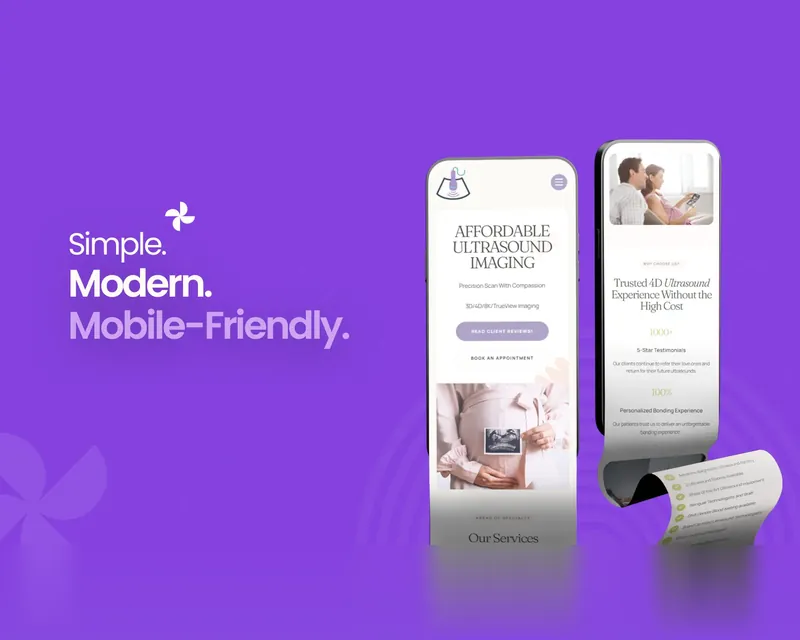
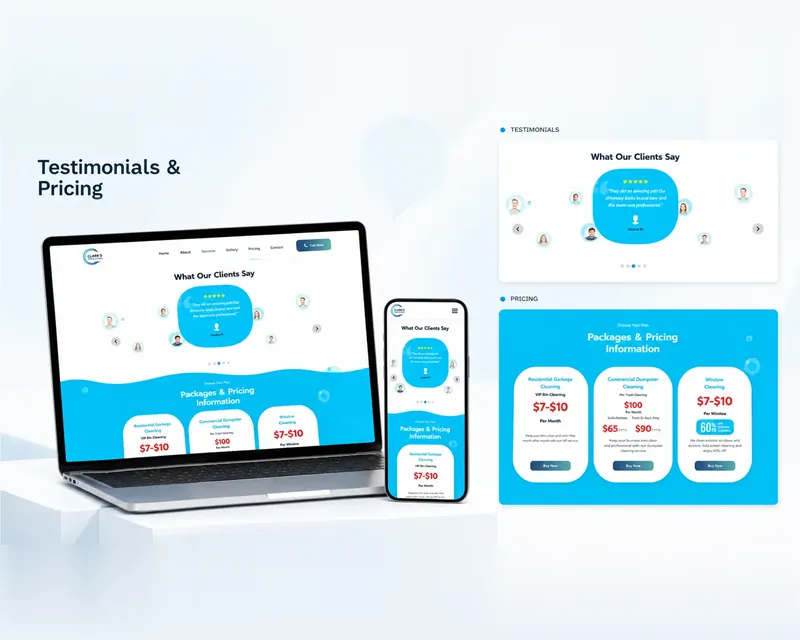
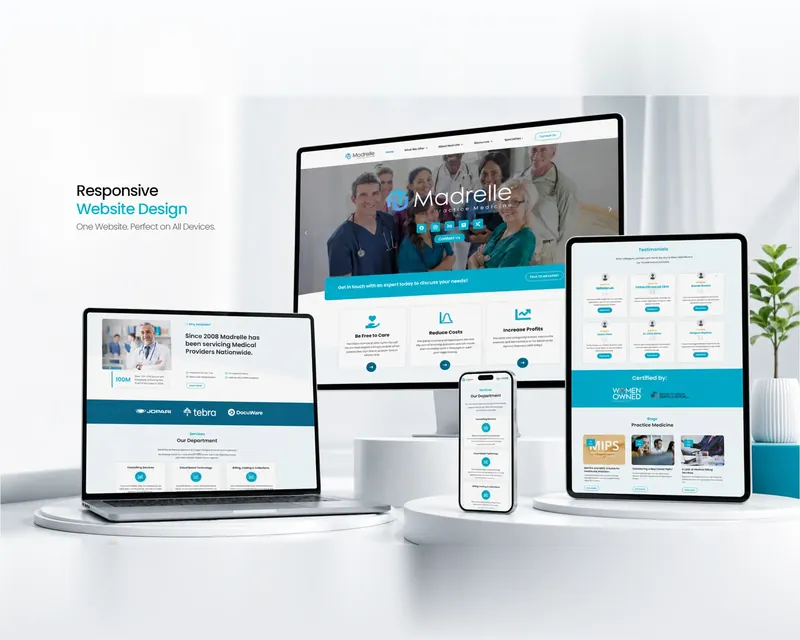
Plus 61 website and branding projects for law firms, clinics, real estate, finance and local businesses.
View the portfolio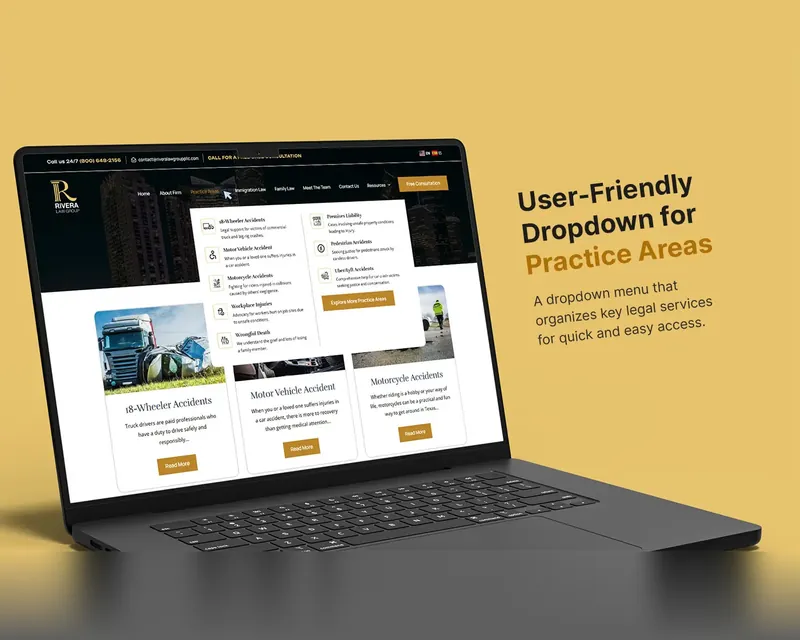


Why Neuralex
We build AI systems that actually perform business work.
Engineering-led
Agents are software systems. We build them with tests, typed tools, version control, and observability — not just prompts.
AI and software together
We design the application, data, and AI as one system, so features don't stall on missing foundations.
Control by default
Scoped permissions, approval gates, and audit logs are part of the baseline, not an upsell.
Honest scoping
We tell you when a rule, an existing tool, or a process change is better than AI.
Workflow-first
We start with how work actually happens, then decide where AI belongs in it.
Strategy to production
One partner from first conversation through deployment and ongoing improvement.
Security & governance
Controls that come standard.
Autonomy without control is a liability. These safeguards are part of every AI system we deliver.
Least-privilege access
Each agent receives only the permissions its task requires, under its own identity.
Scoped credentials
Short-lived, revocable credentials stored in a managed vault — never in prompts or code.
Approval gates
Thresholds that send financial, legal, or customer-facing actions to a person first.
Audit logging
Every observation, decision, tool call, and outcome is recorded and reviewable.
Environment separation
Development, staging, and production are isolated, with test data outside production.
Data minimisation
Only the fields a task needs are sent to a model; sensitive data is redacted where possible.
Evaluation
Test suites built from real cases run before every release to catch regressions.
Monitoring
Quality, cost, latency, and error dashboards with alerts to an owner.
Rollback & kill switch
Any agent can be paused instantly and changes reverted to a known-good version.
Human escalation
Clear routes for uncertain or out-of-policy cases to reach the right person.
FAQ
Frequently asked questions
01What does Neuralex Labs do?
We design and build AI systems that perform business work: AI employees for specific roles, agentic workflows, automation, knowledge systems, and the web applications and SaaS products around them — from strategy through production and ongoing improvement.
02What is an AI employee?
A supervised AI system built around one business function, such as sales development or support triage. It has defined responsibilities, access to specific tools, a knowledge base, and rules for when to hand work to a person.
03Are your AI agents fully autonomous?
Not by default. Agents launch in supervised mode, and specific low-risk actions become autonomous only after they have proven reliable. Sensitive and high-impact decisions stay with people.
04Do you only build AI?
No. We are a complete delivery partner: strategy, product design, web and SaaS engineering, integrations, and AI. Many projects are mostly software with AI where it adds clear value.
05How do you keep AI systems secure?
Least-privilege access, scoped credentials, approval gates, audit logs, environment separation, data minimisation, evaluation before release, monitoring, and the ability to pause or roll back any agent.
06How does an engagement start?
With a strategy call about one workflow or product idea. If there is a fit, we propose a discovery phase or a focused first build with a clear scope.
Next step
Bring us the process your team is tired of doing manually.
A strategy call is a working conversation about one workflow: what it involves today, what could be automated, and what a first build would look like.
What happens next
- 1Tell us about one workflow
- 2We review it before replying
- 3A working session, then a first-build proposal